
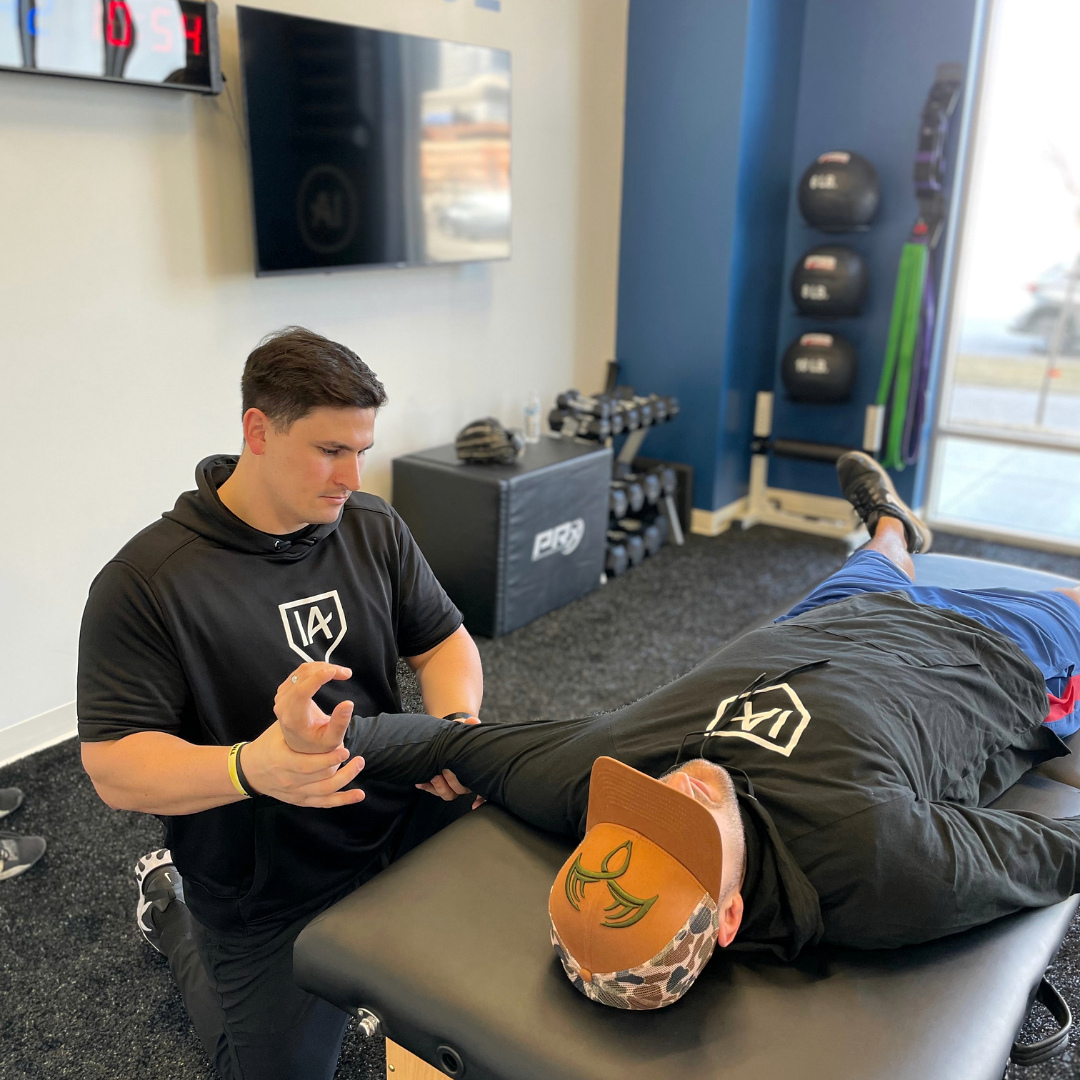
Shoulder Pain Treatment in Des Moines
The shoulder is built for mobility, which makes it easy to irritate and slow to settle. Shoulder pain can turn pressing, pulling, and even sleeping on your side into a problem. And it rarely fixes itself by being ignored.
Common Symptoms & Limitations
- Pain with overhead reaching, pressing, or pulling
- Pinching or catching when lifting the arm
- Discomfort sleeping on the affected side
- Weakness or loss of power in pressing and lifting
- Stiffness that limits training or daily tasks
Possible Contributing Factors
- Limited thoracic and shoulder-blade mobility
- Reduced rotator cuff and scapular strength relative to demand
- Training volume or technique that exceeds current capacity
- Previous injury or irritation that left the area sensitive
- Imbalance between pushing and pulling movements
When Professional Evaluation May Help
- Shoulder pain that has lasted more than a couple of weeks or keeps returning
- Pain that limits pressing, pulling, or overhead movements
- Discomfort that disrupts sleep
- Loss of strength or range of motion
Our Assessment Approach
We don't guess. A thorough assessment helps us understand what's driving your shoulder pain and why it keeps coming back.
- A history of your pain, training, and aggravating activities
- Assessment of shoulder, scapular, and thoracic mobility and control
- Testing of rotator cuff and scapular strength
- A plan that matches your training goals and timeline
Relevant Treatment & Rehabilitation
How the Framework Applies to Shoulder Pain
Calm irritation and restore comfortable range of motion with hands-on care and gentle movement.
Build rotator cuff and scapular strength and improve thoracic mobility to support overhead movement.
Progress pressing, pulling, and overhead loading with a plan that fits your sport or training.
Shoulder Pain in Baseball and Softball Players
Throwing athletes ask a lot of their shoulders. Whether you pitch or play a position, repeated throwing can expose limits in shoulder mobility, scapular control, thoracic spine mobility, and the trunk and lower-body contribution that powers a throw. We assess the whole chain, not just the shoulder, and build a progressive plan toward returning to throwing.
- The physical demands of repeated throwing and pitching
- Shoulder mobility and strength relative to throwing workload
- Scapular movement and control, and thoracic spine mobility
- Trunk and lower-body contributions to the throwing motion
- An individualized evaluation rather than a one-size-fits-all protocol
- A gradual, progressive return to throwing and hitting
Common Questions About Shoulder Pain
Can I keep training with shoulder pain?
Often yes, with modifications. We identify what aggravates your shoulder and adjust load and range while we build the capacity to handle more.
Will I need to stop pressing?
Not necessarily. We may modify range, load, or tempo temporarily, but the goal is to return you to the movements you want to do.
Why does my shoulder hurt when throwing a baseball?
Throwing places repeated high demand on the shoulder. Discomfort can relate to shoulder motion and strength, scapular control, thoracic spine mobility, and how the trunk and lower body contribute to the throw. An individualized assessment helps sort out what is driving your symptoms.
Why does my shoulder hurt after pitching softball?
The pitching motion asks a lot of the shoulder and the whole body. Aches after pitching can reflect workload, mobility, strength, or technique factors. We assess those areas rather than assume the shoulder is the only problem.
When can I return to throwing after shoulder pain?
Return to throwing is individualized and based on your symptoms, movement, strength, and progression through your plan. We do not promise a fixed timeline, and we progress loading gradually as your capacity builds.
Ready to Address Your Shoulder Pain?
Request a free Pain and Performance Assessment to discuss your symptoms, goals, and whether Iowa Spine and Performance may be a good fit.