When most people think about protecting their back, they imagine avoiding heavy lifting altogether.
But in real life, your back isn’t injured by one heavy object. It gets irritated when it doesn’t have the capacity to handle everyday loads like groceries, luggage, kids, or yard work.
The solution isn’t avoiding load.
It’s teaching your body how to manage it.

Your Spine Was Built to Carry Load
Your spine doesn’t work alone. It relies on a coordinated system that includes your grip, shoulders, trunk, hips, and feet. When that system works well, load is shared efficiently and movement feels strong and controlled.
Problems arise when that coordination breaks down. Not because carrying is dangerous, but because the body isn’t prepared for it.
This is where loaded carries come in.
Why Carries Are Different Than Traditional “Core” Exercises
Most core exercises require conscious effort:
“Brace here.”
“Squeeze that.”
“Don’t move.”
But that’s not how your body works in real life.
With carries, your nervous system automatically turns on the right muscles at the right time. This is called reflexive stability.
Muscles like the deep core, obliques, quadratus lumborum, lateral hip stabilizers, pelvic floor, and diaphragm activate without you having to think about it.
You’re not trying to brace, your body does it for you.
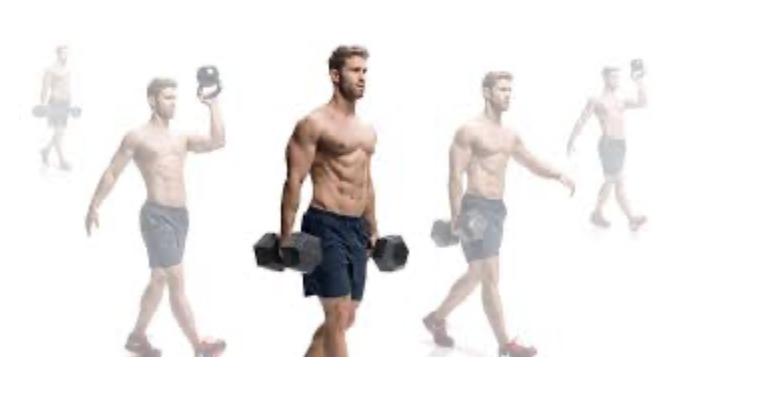
Farmer Carries: Connecting the Entire System Click here to watch!
Farmer carries involve holding weight in both hands while walking.
They challenge:
- Posture
- Grip strength
- Trunk stiffness
- Hip and pelvic control
More importantly, they reconnect the kinetic chain: linking grip → shoulders → trunk → hips → feet into one coordinated pattern.
This connection is often disrupted in people with recurring back pain. Farmer carries help restore it in a simple, natural, load-driven way.
Reps and Sets:
You can progress the intensity (effort) with higher loads, longer duration/distance, or more sets
Weeks 1-4: 2-3 sets to a 5 to 6/10 perceived effort
Weeks 5-8: 4 sets to 7 to 8/10 perceived effort
Weeks 9-14: 4-5 sets to 8+/10 perceived effort – 10/10 means failure to hold any longer
Distance:
Distance can be anywhere between 30 and 200 feet per set
As the load increases, the distance you will be able to travel will obviously go down as well
Use the progression outlined in the Reps & Sets above and aim for somewhere between 30-200' and you’ll be right where you need to be.
Suitcase Circles: Anti-Rotation and Side-to-Side Control Click here to watch!
Suitcase circles place weight on one side of the body.
That uneven load tries to pull you off-center. To stay upright, your obliques, quadratus lumborum, and glute medius activate reflexively to resist rotation and side-bending.
Because you’re walking, these corrections happen dynamically with every step. Exactly how your body has to respond during daily life.
This trains anti-rotation and anti-lateral flexion, two of the most important skills for protecting the spine.
Reps and Sets:
You can progress the intensity (effort) with higher loads, longer duration/distance, or more sets
Weeks 1-4: 2-3 sets to a 5 to 6/10 perceived effort
Weeks 5-8: 4 sets to 7 to 8/10 perceived effort
Weeks 9-14: 4-5 sets to 8+/10 perceived effort – 10/10 means failure to hold any longer
Duration:
Between 30 and 60-seconds is a good rule for suitcase circles.
As the load increases, the duration you will be able to hold the weight will decrease
Use the progression outlined in the reps and sets above, and aim for somewhere between
Execution:
If the load is in your right hand you will walk clockwise
If the load is in your left hand you will walk counterclockwise
Lean into the circle a little bit to start and then maintain that position as you walk briskly in circles
Building a More Resilient Back
Resilience doesn’t mean your back will never feel sore again.
It means your spine can:
- Tolerate stress
- Recover faster
- Handle everyday demands without constant flare-ups
Training the body under controlled load makes the entire system more robust and harder to break. Avoiding load altogether often does the opposite, it lowers tolerance and increases sensitivity.
How to Start Using Carries
- Start with manageable weights and focus on posture
- Walk tall and briskly without leaning or rushing
- Use farmer carries for overall strength and endurance
- Use suitcase carries or circles for side-to-side control
- Progress weight, distance, or time gradually
Simple doesn’t mean easy, but it works.
Strong Backs Aren’t Fragile
Carrying heavy things is not inherently dangerous for your back. When done correctly, it’s one of the safest and most effective ways to build real-world spinal support.
Pain doesn’t automatically mean damage. It often means your system isn’t prepared yet.
Strong backs are trained, not protected from life.
When to Get Help
If carrying even light objects consistently triggers pain, stiffness, or fear, it may be time for individualized guidance.
Recurring flare-ups, feelings of instability, or uncertainty about how to progress safely are all signs that a more tailored approach could help.
Ready to Build a More Resilient Spine?
If you want help getting to the root cause of your back pain, we offer a FREE Discovery Visit.
and learn how to make your spine stronger, not just protected.

Dr. Cameron Whitehead
Contact Me